

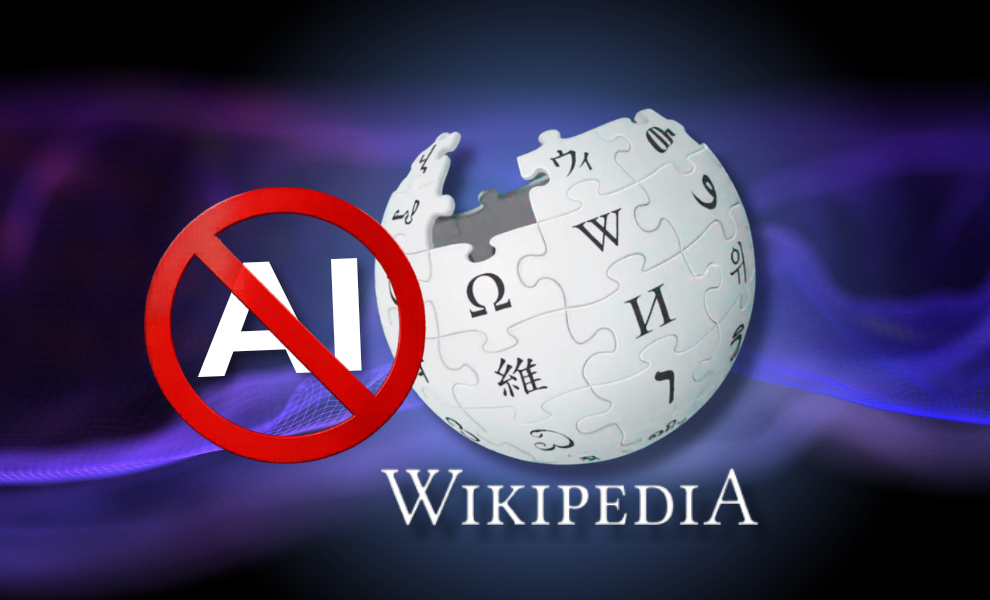
Wikipedia has updated its English-language policy to block the use of large language models for writing or rewriting articles. The move applies to the encyclopedia’s volunteer editors as per the announcement made on March 27 and 28, 2026. The policy marks one of the clearest anti-AI content rules adopted by a major knowledge platform so far.
Wikipedia’s restrictions still allow limited use of AI for basic copyedits and translation, but only under strict human review and only when the tool does not add its own content. Major AI models include ChatGPT, Gemini, Claude, and DeepSeek.
Users Can’t Create or Update Wikipedia Articles with AI-Generated Text!
According to Wikipedia’s own page on large language models, AI tools are considered risky because they can produce hallucinated claims, unsourced material, non-neutral wording, and even fabricated references. Considering such issues, the open-source online encyclopedia puts restrictions on AI-generated content.
The policy also says editors remain fully responsible for any AI-assisted changes they make. Reportedly, Wikipedia’s community approved the rule of volunteer editors after debate over how to handle machine-written text.
Why Wikipedia Banned AI-Generated Content?
Wikipedia highlights that the ban is meant to protect the site’s core standards. Those standards include verifiability, no original research, neutrality, and compliance with copyright rules. The platform argues that AI-generated text can look polished while still containing false or unverifiable statements, making it hard for editors to catch errors quickly.
The concern is not just the style of AI-generated content, but trust. In an encyclopedia built on citations and human checking, even a small amount of inaccurate AI text can create serious problems for readers and editors alike.
Where Can You Still Use AI?
The step is not a total ban on AI tools. Wikipedia says editors may use LLMs for basic copyediting of their own writing and translation, provided they review the result carefully and ensure the model does not introduce new information.
AI can surely help behind the scenes, but it will not be allowed to write the articles in the encyclopedia itself. Wikipedia’s decision reflects a broader push to slow the spread of machine-written misinformation and keep human judgment at the center of publishing. The step will further contribute to regulated AI content distribution over the internet.
Keep up with major tech headlines and announcements with HiTechNectar!
Also Read:
The Hard Hit on AI Content: Checking Out on Google Manual Action Update
Google Search Core Update 2024 Taking a Dig at ‘Unhelpful’ and ‘Spammy’ Content