

Your brand’s success totally depends on customers! Read it twice! Yes, customers are the cornerstone of your business, as they are the ultimate route to your pitch, sales, and driving ROI. But how do you go about it?
There are certain factors that B2B and B2C brands need to keep in mind, such as building trust, loyalty, visibility, and credibility in the industry.
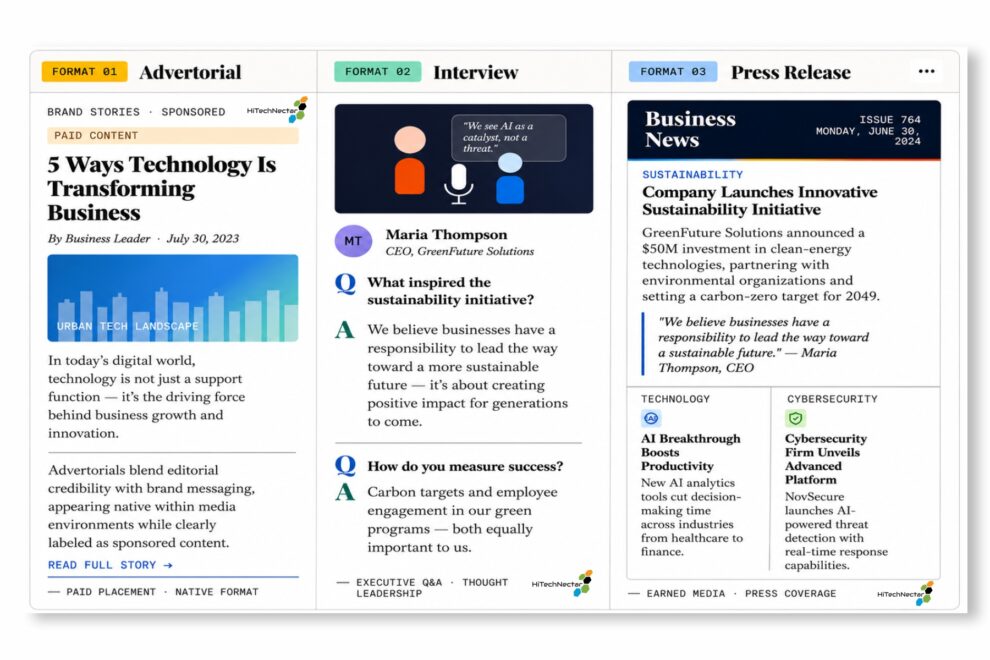
Businesses mainly rely on various media, including PR, interviews, and advertorials. Each of them comes with a certain purpose; however, the end goal remains the same – to boost brand credibility and visibility in the market. According to reports, 93% of B2B buying decisions start with online research, highlighting the need for strong online visibility.
However, each differs significantly in certain respects. Thus, understanding the key differences between them is crucial. This blog breaks down the key definitions of all three, including their characteristics, differences, and how using both can drive solid results. So, let’s get started!
Why Advertorials, Interviews, and PR Matter for Brand Visibility?
Customer behavior has changed dramatically in today’s competitive business landscape. Visibility is no longer just about your brand being seen; it goes beyond that and includes staying in customers’ minds, building trust, and more. Customers, investors, and stakeholders interact with brands through different touchpoints before making decisions. Advertorials, interviews, and PR are key to this.
Everyone benefits from a different type of format: advertorials educate and promote; interview humanize brands through expert voices, and PR validates brands and products through a third party. All of these visibility forms support the brand’s visibility, authority, reputation, and relationship with the target audience. The more strategic brands use these channels, the more successful they will be!
What is an Advertorial?
An advertorial is paid media content, basically a form of advertising that looks like a regular article or editorial in the publication. It is a paid ad that appears in print or online media; however, it is written as a news article.
The primary goal of an advertorial is to build trust among the target audience and encourage them to take further action. Advertorials present information about a product, service, or brand that appears unbiased, but is paid.
Key Characteristics:
- Advertorials are written professionally to deliver value to the audience.
- Uses storytelling rather than a direct sales pitch, fostering a deeper connection with the audience.
- Advertorials, when executed well, can help to enhance brand image while promoting your brand’s product or service.
- Greater control over messaging and content.
- They are usually labeled as “Sponsored Content,” “Promotion,” “Paid Content” to distinguish from editorial content.
What are Interviews?
Interviews are a powerful medium in public relations (PR) in which the company’s founders, spokespersons, or industry experts share insights, expertise, and opinions with the public. PR professionals, journalists, or podcasters usually host interviews.
The main aim here is to strengthen the company’s brand image and credibility among the audience by sharing stories. When leaders speak, they make an impact. Founders’ interviews especially play a major role in setting the core pace of your business.
Key Characteristics:
- Focuses on a person’s knowledge and opinion.
- Encourages authentic storytelling.
- Interviews are often published as Q&A, podcasts, videos, or feature stories.
- Helps build a brand reputation and build trust among the audience.
What is PR?
Public Relations (PR) is basically the method of managing a brand’s reputation through acquiring strategic communication relationships across different media channels. A well-established PR strategy positions the company on the global stage and fosters positive relationships with the media, stakeholders, and the community. According to stats, 92% of customers trust earned media more than any form of paid advertising.
The concept is simple: gain earned media coverage while others tell compelling stories about you. While ads need payment for visibility, PR depends on earned media coverage to improve visibility, build trust, and boost your brand reputation.
Key Characteristics:
- Earned media and credibility, wherein it mainly relies on third-party validation.
- Helps in building brand reputation and image for the long term.
- As PR relies on third-party validation, i.e., earned media, it cuts the costs associated with paid advertising.
- PR activities are designed to achieve the organization’s goals.
Advertorial vs Interview vs PR: Head-to-Head Comparison
Parameter |
Advertorial |
PR |
Interviews |
| Type | Paid media | Editorial feature | Earned media |
| Primary focus | Brand promotion through sponsored content | Earned media coverage by sharing news updates | Founders and though leaders sharing their experience, opinions |
| Cost | Paid | Earned media with no placement fee | Mainly free, depends on the publication or platform |
| Credibility | Moderate, as it it’s paid content | Helps to gain very high credibility among the audience | Very High, as it showcases the authentic perspectives from leaders |
| Control | Complete control over the content | Partial Control | Limited control |
| Audience Trust | Medium | High | Very High |
| Ideal for | Product launches, visibility and service promotions | Company announcements, partnerships, expansion, and more | Sharing expert insights, industry commentary |
| End Results | Brand awareness, lead generation | Improving visibility and media reputation | Thought leadership and personal branding |
Which Visibility Format Should You Choose? Advertorial vs Interview vs PR
When moving forward with your PR campaign, it is necessary to understand which visibility format works best and when to choose it.
Choose an Advertorial for:
- Product Launches: Works well for a firm launching a product with certain deadlines.
- Time-sensitive campaigns: Where timing plays an important role due to advertorial investment.
- Guaranteed Visibility: Provides the visibility needed for event announcements, promotions, or launches when earned media doesn’t fit.
- Need to educate the audience: Use precise content, technical details, and regulatory language to educate your audience.
Choose PR for:
- Build credibility: When you want third-party validation, such as journalists or influencers, to talk about your brand, you can build trust faster.
- Launching a Big Product/Milestone: PR helps create buzz in the market when you launch a product, add a new lineup, or scale.
- Attract Customers: You genuinely want to attract customers and investors to your products.
Choose Interviews for:
- Create Executive Thought Leadership: Make key personnel trusted experts by sharing valuable insights, knowledge, and industry views.
- Share Unique Industry Insights: Present original thoughts, market observations, and experiences that add value to the conversations.
- Establish Trust and Credibility: Gain audience trust by showing your expertise, authenticity, and knowledge of industry issues.
- Build Personal Branding: Promote executives’ expertise, accomplishments, and career trajectory.
Does a Combined Strategy Work?
Yes! The most successful brands do not just depend on a single format. Rather, they combine all of these, including advertorials, interviews, and PR, in the right way.
This integrated approach is meant to drive results, allowing brands to improve reach, authority, audience engagement, and conversions simultaneously. After all, it’s up to you if you need better results at once by combining them all or implementing one of them.
Summing it Up!
In today’s highly competitive digital realm, visibility is not about publishing content; it’s about choosing the right storytelling format for the right audience and goals. Advertising helps to market your products and services. Interviews build authenticity and leadership authority. PR boosts credibility and industry recognition.
It’s necessary to understand when to use what and which format to improve brand image and audience engagement. Indeed, the right visibility strategy can be a solid growth driver for businesses when implemented effectively.
Read more about such insightful B2B topics on our website.
Recommended For You:
Building Brand Recall Through Display Advertising
Product Launch Visibility – Press Releases That Work