

Another month, another Google update! But wait, if your content violates Google’s Spam policies, the latest search algorithm update can significantly impact your site.
Google June 2026 Spam Update completed rolling out after two days and one hour. The update was released on June 24, 2026, at 09:03 PDT and was announced as completed on June 26, 2026, at 10:58 PDT. The update rolled out globally and across all languages. This is Google’s second spam update of 2026, following the March 2026 Spam Update and the fifth overall search algorithmic update of the year.
The step reflects Google’s effort to limit and remove search spam and spammy content, and to provide users with valuable search results. As the Google Search Status Dashboard suggests:
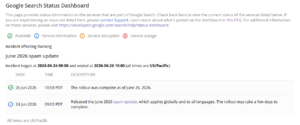
As a result of the update, websites worldwide have observed major fluctuations in traffic. Site owners and SEO professionals are advised to monitor changes, analyze them, and make adjustments while adhering to Google’s spam policies.
Why Has Google June 2026 Spam Update Been Rolled Out?
The rollout of Google June 2026 Spam Update suggests the firm’s continuous effort to make search more relevant and identify search spam more effectively. As the second spam update of 2026, it improves Google’s automated and AI-driven spam detection system, SpamBrain.
The spam prevention systems generally track content that violates Google’s spam policies. According to the policies, spam is a strategy used to manipulate users and search systems to achieve higher search rankings. The set guidelines are applicable across all web search results, including Google’s own properties.
June 2026 Spam Update to bring major improvements to Google’s spam prevention systems. As a result, sites are experiencing major volatility in their web traffic. However, quick fixes should be neglected for long-term impact.
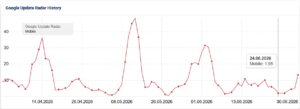
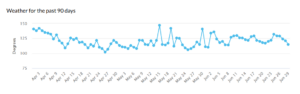
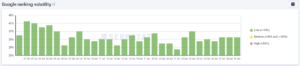
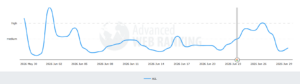
Traffic Fluctuations Across Web Traffic Tracking Tools: Advanced Web Ranking
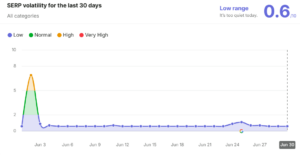
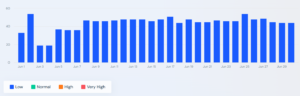
Web and SEO analysis tools track noticeable fluctuations following the release and completion of the Google June 2026 Spam Update. While one group observed a sudden hike in their traffic, another group shockingly lost traffic. Here is what different tools have observed:
What Are Google Search Spam Updates?
Google Search spam updates are time-to-time spam-prevention improvements to restrict spammy content on the search results. With the rollout of each spam update, Google makes significant improvements to its spam prevention systems and how they function. It helps in making the search more relevant and helpful for users.
SpamBrain is Google’s most advanced solution to overcome spam that was launched in 2018. It is an AI-powered system that continuously operates to recognize search spam. SpamBrain has identified and reduced hacked spam by 70% and gibberish spam on hosting platforms by 75%. So, a spam update by Google typically upgrades SpamBrain’s capabilities and improves its efficiency while identifying search spam.
Google Web Search Spam Policies:
Spam policies for Google web search are strict guidelines that limit manipulative efforts to achieve higher search rankings. These guidelines apply across different search result formats, such as images, videos, web pages, text, news content, and more.
The policies list the common types of spam practices to create content only to rank higher on the search results, including:
- Cloaking
- Doorway abuse
- Expired domain abuse
- Hacked content
- Hidden text and link abuse
- Keyword stuffing
- Link spam
- Machine-generated traffic
- Malicious practices
- Misleading functionality
- Scaled content abuse
- Sneaky redirects
- Thin affiliation
- User-generated spam
Visit Google’s document for a thorough understanding of the spam policies.
What Have SEO Practitioners Been Saying About Google June 2026 Spam Update?
SEO practitioners have shown their frustration over Google’s search algorithmic updates and changing traffic dynamics. While some believe the updates cause major fluctuations, another section of SEO practitioners states that the update is ultimately benefiting spammy content, impacting high-value content negatively. Here’s what WebmasterWorld has recorded as people’s reaction to the latest spam update:
A senior member of the site, named Micha, has stated, “Is there possibly a Google update rolling out right now? The recovery of our news site seems to be over; big drop today. I can’t say much about the shop yet, but there I’d probably blame the hot weather before anything else.”
Another senior member, named Christianz, said, “Those almost always reduce traffic to genuine sites and boost spam sites. I would say with 90% accuracy. Especially with AI when spam sites are mostly very rich, verbose, unique non-commodity AI slop, prime content for Spam Update promotion, especially in combination with big tech domain for that shot of undeniable authority.”
After the completion of the update, a user named Martin Ice Web, wrote, “Very big drop since yesterday. (-80%). We do NOT SPAM.
Beside that our rankings improved significantly (using VPN). But traffic comes in surges. 1 hour nothing only bots. Next hour normal traffic.
We see traffic to 1 page from 10 different IPs within 2 seconds.”
What Should You Do?
As the update has finished rolling out, SEO practitioners and site owners are suggested to wait a few days and review its complete impact on sites. Once the changes and fluctuations are assessed, you primarily have to track which Google spam policies your content is actually violating.
Such an approach to content evaluation will offer a clearer picture of your traffic changes. If the content fails to meet the quality standards, create high-quality content. On the other hand, if it is causing link spam, you might have to change the links. Plan and initiate content changes accordingly for traffic and ranking recovery.
Nevertheless, recovery can take significant time. Patience will play a crucial role in this regard.
Timeline of Google’s Algorithm Updates in 2026:
- February 2026 Discover Update: Started on February 5, 2026, and ended on February 27, 2026 (21 days, 17 hours).
- March 2026 Spam Update: Started on March 24, 2026, and completed on March 25, 2026 (19 hours, 30 minutes).
- March 2026 Core Update: Started on March 27, 2026, and ended on April 8, 2026 (12 days, 4 hours).
- May 2026 Core Update: Began rolling out on May 21, 2026, and completed on June 2, 2026 (11 days, 21 hours).
- June 2026 Spam Update: Released on June 24, 2026, and finished rolling out on June 26, 2026 (2 days, 1 hour).
End Note:
June 2026 Spam Update is the fifth consecutive search algorithmic update that Google has introduced this year so far. It reflects how search dynamics are changing continuously, and to stay ahead, sites must prioritize creating authentic and valuable content for web users. You can track issues and incidents causing volatility on your site by visiting the Google Search Status Dashboard.
HiTechNectar is a leading publication that assesses emerging technologies and search practices. Check out our other insightful blogs for a thorough understanding of the latest breakthroughs across the tech industry.
FAQs:
Q1 How long did the June 2026 spam update take to complete?
Answer: The Google June 2026 spam update took two days and one hour to complete.
Q2. What are the new updates in SEO?
Answer: The new updates in SEO refer to Google’s search algorithm changes, including the February 2026 Discover Update, the March 2026 Spam Update, the March 2026 Core Update, the May 2026 Core Update, and the June 2026 Spam Update.
Q3. How will the June 2026 spam update affect website rankings on popular search platforms?
Answer: The June 2026 spam update will significantly impact the rankings of web pages that use manipulative content to achieve higher rankings. The websites will be able to track fluctuations on popular search platforms, including SEMRush and SimilarWeb.
Q4. Which services offer automated tools for identifying spammy content?
Answer: Akismet and OOPSpam are among the automated tools for identifying spammy content.
Recommended For You:
Google May 2026 Core Update Rollout Completed; Sites Face Significant Volatility