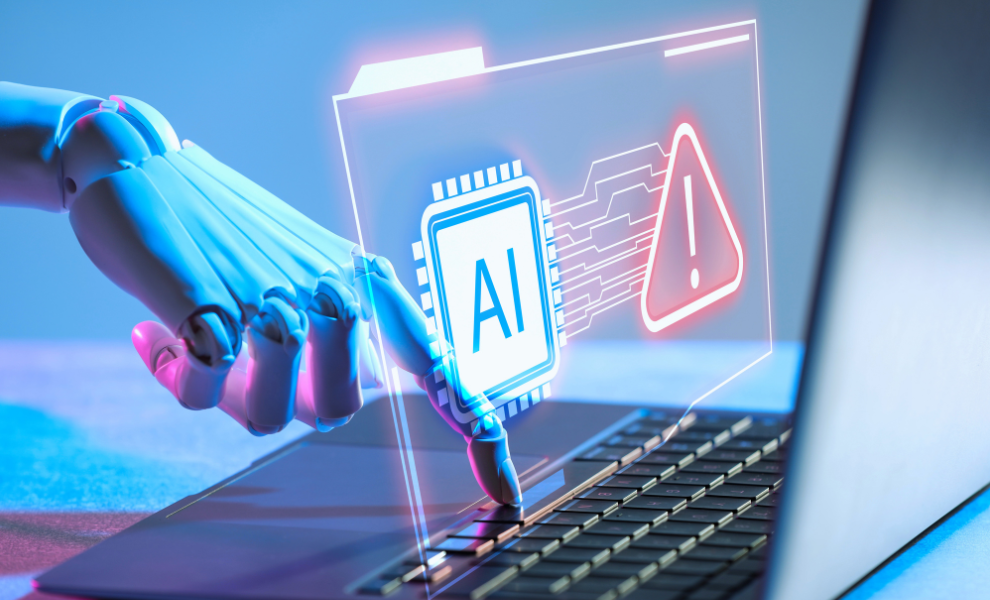
The involvement of AI in enterprises is going beyond chatbots and assistants. With the emergence of LLMs capable of performing tasks with minimal human input, Agentic AI is the next step in the AI era, working on your behalf. It can plan, decide, and act on its own with minimum human control. The possibilities of what technology can do are endless!
Agentic AI marks a shift from models that respond to prompts to systems that act as autonomous workers. It’s transforming complete enterprise operations, workflows, and productivity in short order. However, the upsides are significant. But so are the agentic AI risks that shouldn’t be overlooked. Every area, such as the tools used, memory, interactions, and more, introduces threat opportunities for attackers. Dig into the blog to understand the detailed concepts around agentic AI security risks.
What is an Agentic AI?
Agentic AI is a broader field within artificial intelligence, powered by large language models and generative AI. It is designed to operate with a higher degree of autonomy to plan, execute tasks, make decisions, and take action accordingly on your behalf. Unlike traditional AI systems, these agents interact with a range of tools, APIs, and workflows. The following are some of the examples:
- Autonomous customer service agents
- Business workflow agents
- Security operations agents
Why Are Agentic AI Risks a Growing Threat for Enterprises?
There is a rise in the use of autonomous AI agents in organizations. However, it is highly prone to security risks that need to be addressed. Agentic AI risks are often described as the security, compliance, and governance challenges that arise when AI agents act autonomously without human intervention.
The risks are mainly associated with access controls, accountability, and decision transparency, as AI agents have access to sensitive information across the organization. It is important to reduce these risks by logging tool calls and decision paths, including human checkpoints. An effective approach is essential to securing agentic AI.
How Do Agentic AI Security Risks Differ from Conventional Security Threats?
Agentic AI is fundamentally different from traditional AI systems, as it can make decisions independently and operate autonomously. As enterprises rely solely on them, these agents have access to databases, APIs, and sensitive information, increasing the risk of misuse or cyber threats.
The focus from securing AI models to securing autonomous actions is challenging. A compromised AI agent does not just leak data; it can also perform harmful actions, requiring security guardrails for safer deployment. Traditional security risks are easier to detect and mitigate, and their impact is slower than that of agentic AI.
A Look at the Top Agentic AI Security Risks Every Enterprise Faces Today
Below are some of the agentic AI security risks enterprises face today.
1] Shadow AI Agents: There may be times when your team faces security risks. They can deploy AI agents without your IT team’s approval. This can create hidden security risks, vulnerable attacks, agent sprawls, and more.
2] Privilege Compromise: This type of attack occurs when attackers exploit permission weaknesses to gain unauthorized access. Misconfigurations and weaker access controls can grant AI agents higher-level permissions, increasing the risk of a system-wide compromise.
3] Memory Poisoning: It is one of the cybersecurity threats that can impact enterprises using Agentic AI. In these attacks, attackers inject malicious instructions into AI agents’ long- or short-term memory, impacting their overall decisions, performance, and more.
4] Prompt Injection: Agents can be compromised by malicious code hidden in your sensitive documents, emails, or website content, without prior notice.
5] Intent Breaking and Goal Manipulation: Intent breaking happens when attackers control an agent’s planning or the entire goal-setting process. Attackers can redirect autonomous AI agents toward false outcomes while they still believe they are on the right track.
Practical Ways to Secure AI Agents: Best Practices for Enterprise to Stay Prepared
The following are some of the best practices enterprises need to consider safeguarding against agentic AI risks.
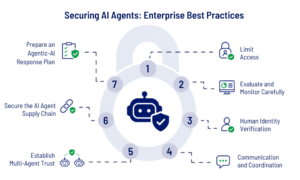
1] Limit Access: Ensure that each agent has only the minimum required access to complete the task. Apply policy-as-code to prevent the misuse of the tool and ensure governance.
2] Evaluate and Monitor Carefully: Before the deployment phase, test AI agents across different scenarios to identify weaknesses, security risks, and unexpected behavior. Alongside, monitor the performance issues that could impact reliability and accuracy.
3] Human Identity Verification: Always assign a verified human identity to every agent. Also, trace each autonomous action and authorization back to the trusted source.
4] Communication and Coordination: In autonomous systems, communication is a key decision path. So, it is necessary to secure communication.
5] Establish Multi-Agent Trust: It is essential to establish a multi-agent trust. Make sure to treat all inter-agent communication as unsafe inputs and validate every action before execution. Build a strong multi-agent trust framework with constant monitoring and verification.
6] Secure the AI Agent Supply Chain: Organizations should recognize the hazards that come with AI agents having access to data, systems, and workflows. It is necessary to govern and optimize traceability across each stage of the supply chain.
7] Prepare an Agentic-AI Response Plan: An effective agentic-AI response plan carefully mentions how autonomous AI agents detect, make decisions, and act. The plan helps in balancing operational efficiency alongside following all the security guidelines while keeping humans in the loop.
What Does Strong Agentic AI Governance Look Like?
Every security approach should consider the compliance framework that is appropriate to your industry. It is the key to ensuring the agents stay aligned with all the standard practices. The rise of agentic AI has urged the need for regulatory compliance, frameworks, and governance. The following are some important agentic AI security initiatives to consider.
OWASP ASI: It has become the most powerful resource for agency security-related threats. It has published a taxonomy of 15 threat categories for agentic AI.
ISO/IEC Standards: A few standards related to agentic AI:
ISO/IEC 42001:2023: An international standard that lists the requirements for implementing, maintaining, and constantly improving an Artificial Intelligence Management System (AIMS).
ISO/IEC 23894:2023: Focuses on how organizations that develop, deploy, or use products that use AI can manage risks related to AI.
EU AI Act: The EU AI Act (European Union Artificial Intelligence Act) is widely considered the world’s first comprehensive legal framework for AI.
Real-World Examples of Agentic AI Attacks
Below mentioned are some of the real-world examples of the agentic AI attacks.
1. Moltbook– Agent-to-Agent Prompt Injection Attack (January–February 2026)
Attack Type: Prompt Injection / Agent Hijacking / Reverse Prompt Injection
Recently, cybersecurity firms have analyzed the popular AI-only social network for autonomous agents, Moltbook. During the analysis, a vulnerability was found that exposed sensitive data and malicious activity were exposed by the bots.
AI agents on Moltbook were targeting other agents with prompts mainly designed to manipulate their behavior. These agent-to-agent attacks came up with triggered account deletion, spreading jailbreak instructions, and establishing false authority. Also, an exposed AI key was found that gave access to sensitive data, how the AI agents become vulnerable to prompt injection and social engineering attacks.
2. Step Finance— AI Trading Agent Privilege Abuse (January 2026)
Attack Type: Privilege Compromise / Autonomous Agent Executing Unauthorized Actions
Another real-world example is of Step Finance, a Solana DeFi portfolio manager, wherein attackers compromised their executive devices. The compromised devices became more vulnerable with the AI trading agents increasing the impact. The agents could execute large SQL transfers without any human permission. Once attackers gained access, the agents shifted 261,000+SQL ($27-30 million). This caused Step Finance to close completely.
The Future of Agentic AI Security!
As we know, enterprise AI has entered the agentic phase, wherein the autonomous systems can perform complex tasks independently at machine speed. As this technology gains traction, security considerations must keep pace with innovation.
The challenge is not only protecting AI models but also securing the complete autonomous ecosystems that can make decisions and act on behalf of organizations. The future is promising enterprises that address agentic AI risks today will unleash the full potential of this technology tomorrow.
Start Turning Risks into Preparedness!
Agentic AI is beneficial in most scenarios, such as transforming enterprise automation, decision-making, and innovation. However, they are more prone to attack surfaces due to their autonomous security challenges, which differ from traditional software risks.
Enterprises should aggressively address the concerns mentioned above to achieve maximum productivity while maintaining security. By implementing robust governance, continuous monitoring, and proactive security testing, organizations can reduce security risks and embrace the future of AI-driven operations.
To stay in the loop of all the latest content, head over to our website now.
FAQs
1] What is the biggest issue with Agentic AI?
Answer: The biggest challenges with agentic AI include its autonomous decision-making without human oversight, prone to prompt injection, and memory poisoning attacks. The challenges also include difficulty in tracing and auditing agent actions across complex workflows.
2] How do you detect if an AI agent has been compromised or manipulated?
Answer: You can monitor decision paths, tool calls, and memory changes. Also, track communication patterns for changes in behavior.
Also Read:
OpenAI Introduces GPT-5.3-Codex: Its Most Capable Agentic Coding Model