

Running a business is simply not easy. It requires a whole lot of work and planning on the other side. With technological advancements, traditional methods are becoming obsolete. Managing physical assets manually is challenging and can lead to errors.
Be it maintaining office assets records, vehicles, machinery, groceries, or other items, it is essential to keep a track of how they are being used, their history, status, and location. All this can be done with an instant scan from your mobile phone. Alongside, cut down on the traditional manual tracking errors and time span.
Here comes the modern method of QR code for asset tracking. A QR code is a Quick Response Code that outperforms traditional bar codes. Its features, ease of use, and ability to store and scan information quickly make it an ideal choice for asset management. As per data, the QR Code Labels market is anticipated to be at $1.8B in 2025 and is projected to reach $4.1B by 2035.
Read on to learn all about QR codes for tracking your assets, including their benefits, features, and more. Let’s get started.
What is QR Code Asset Tracking?
QR code asset tracking serves as a modern method of managing physical assets by attaching QR codes that can be scanned with smartphones or tablets to instantly access and update asset information.
Unlike manual logs, which are prone to errors and time-consuming, or barcodes, which require specialized scanners, QR codes offer a more accurate and user-friendly solution. This approach is highly scalable and cost-effective, making it accessible for businesses of all sizes to track assets efficiently.
Benefits of Using QR Codes for Asset Tracking
Check out the key benefits of QR code tracking for more efficient management of your business assets.
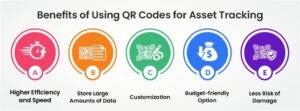
1] Higher Efficiency and Speed: QR codes allow super-quick scanning from any angle, reducing the time required to track and manage assets.
2] Store Large Amounts of Data: Large volumes of data, including URLs, logs, and serial numbers, can be stored in QR codes rather than bar codes.
3] Customization: QR codes can store different types of information, offering flexibility in changing asset details.
4] Budget-friendly Option: Creating and printing QR codes is an ideal, cost-effective option. There is no need for an expensive hardware device, as they can be easily scanned using smartphones.
5] Less Risk of Damage: One of the prime benefits of QR codes is that they are likely to get damaged and possess a built-in error correction process. So, even if there is slight damage, they can be scanned easily.
Key Features that Make QR Code Tracking a Worthy Option-
QR codes go above and beyond by simply tracking the assets. They ought to be an end-to-end asset management solution. Below are the main features that make it stand out among other tagging options.
1] Real-time tracking: Immediately updates asset status, location, and history in real-time when it is scanned.
2] Mobile Compatibility: Works well with smartphones and tablets and does not require any specialized hardware.
3] Highly Durable: QR codes can be scanned even if they are damaged partially or get dirty in any case.
4] Faster Check In/Check Out: Helps to ease lending, moving, or returning assets within the organization.
No-Code Setup: How to Get Started with QR Code Asset Tracking for Your Business?
You don’t require complex software to implement QR code asset tracking. It’s a simple, straightforward process with modern tools that let you set up everything through a no-code interface.
Generate QR Code: First, generate a unique QR code for each asset using a QR code generator or the asset management software.
Print the QR Codes: In this step, print the QR codes on labels to be applied to the asset, taking into account the environment where the asset will be used.
Start Scanning: Scan the QR codes using your mobile phones or tablets, so you and your team can keep track of your assets, manage them, check ins and outs, and more.
Thus, by following a no-code approach, you can launch a complete asset-tracking system with ease, eliminating the need for an IT team or significant setup costs.
Common Applications of QR Codes for Asset Tracking
QR code asset tracking is applied to a wide range of industries. From education, healthcare, manufacturing, and IT, its potential is immense. The following are a few applications wherein QR code asset tracking is used commonly:
IT and Tech Services: Hardware, laptops, and other software products are tracked and monitored using this approach.
Grocery/Medical Shops: QR codes are commonly used in grocery shops to track stock, monitor expiry dates, streamline audits, and more.
Tools & Equipment Tracking: Efficient tracking of construction tools and equipment, to prevent loss and unauthorized use.
Raw Materials: Keeping track of the raw materials, stocks, and more in the warehouses to avoid manual errors.
Wrapping it Up!
QR code asset tracking is gaining traction today over traditional barcodes due to the benefits it brings to the table, such as fewer errors, higher efficiency, accountability, and help to scale without hassle. This approach is highly effective for teams looking for an alternative to the common spreadsheets.
It is today applied across a range of industries and many asset-intensive operations moving towards this smarter and more reliable method of tracking. As organizations today prioritize accuracy, real-time visibility, and mobility, QR-based tracking systems will become increasingly relevant.
Visit our website now to stay up to date on trending blog posts.
FAQs:
Q1. What is asset tracking mainly used for?
Answer: Asset tracking is used to keep an eye on an organization’s physical assets to boost efficiency and avoid losses.
Q2. How does QR code tracking work?
Answer: QR code tracking is mainly the process of analyzing and monitoring the overall engagement data generated after users scan a QR code.
Recommended For You: