Did you know that, according to a report cited by UNESCO, 1 billion ChatGPT queries per day consume about 124 GWh of electricity?
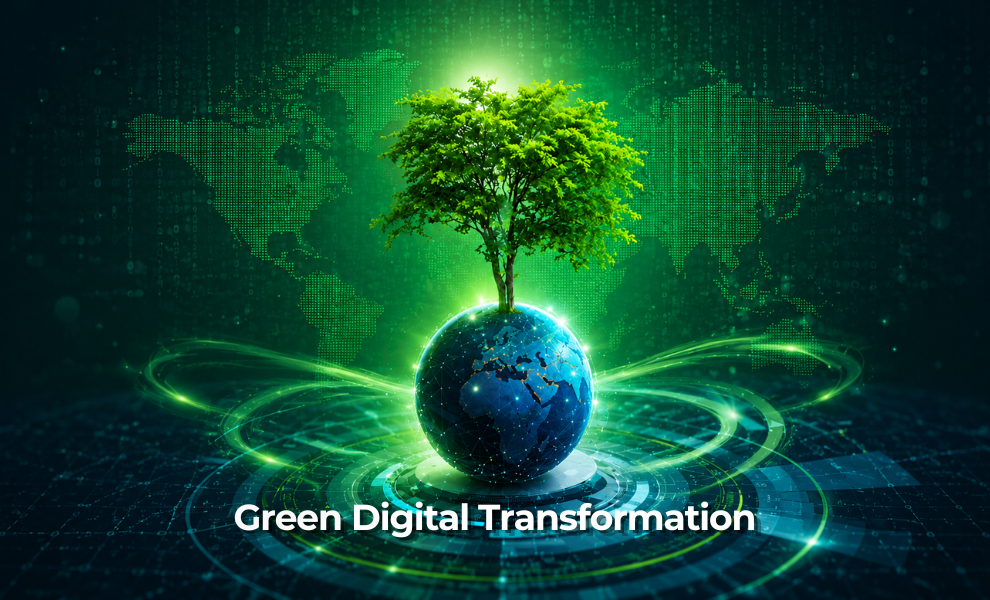
Considering the above information, concerns about technological advancements negatively impacting the environment are valid. But what if there was a solution that combines digital transformation with sustainability? This method is known as green digital transformation.
Let us learn about the solution that merges digital advancement with sustainability to create a greener future.
Understanding Green Digital Transformation
Green digital transformation is a solution to minimize the negative environmental impact of technology by leveraging digital measures. Since global businesses are shifting toward a tech-first infrastructure, prioritizing sustainability has become more important than ever.
In this regard, leaders and decision makers across regions are adopting the ‘twin transition’ strategy, which is helping them align their digital and sustainable goals for a greener future.
There are two key approaches involved in green digital transformation:
- Making existing technologies more sustainable:This step ensures that existing technologies do not increase the environmental footprint when developing modern digital infrastructure.
- Using technological solutions for sustainability:On the other hand, this step makes use of modern technology to monitor and alleviate climate change and other environmental concerns.
As the book Green Digital Transformation: How to Sustainably Close the Digital Divide and Harness Digital Tools for Climate Action suggests, companies providing digital technology solutions have the power to positively impact climate change with their technologies. Hence, instead of being the core contributor to environmental pollution, these companies can adapt to climate change and provide sustainable development through green digital transformation.
Key Types of Green Digital Transformation
As discussed above, there are two key approaches to green digital transformation. Below are a few examples of both approaches.
1. Making existing technologies more sustainable
- Liquid cooling, edge computing, and using machine learning to monitor, adjust, and distribute computing resources in real time reduce energy consumption in data centers by up to 50%.
- Digital twins replicate business and industrial processes, providing real-time data and insights to improve resource management. Using digital twins and AI in industrial processes not only increases efficiency but also helps conserve energy.
- Technologies in Europe, such as Lumoview, can scan buildings in just 2 seconds and provide information on the building’s layout and thermal data. Then, the platform can use that information to create energy-efficient building models and renovation plans.
2. Using technological solutions for sustainability
- Fleet management systems can reduce costs and carbon emissions by optimizing charging, routing, and vehicle utilization for electric vehicles.
- The implementation of Virtual Power Plants (VPPs) provides smart energy solutions by efficiently allocating energy resources to solar panels, electric vehicles, smart thermostats, and other sources in green digital transformation.
- Satellites and AI can be merged to obtain real-time data on biodiversity and updates on climate change. Then, AI-powered blockchains can help provide solutions and funding to restore the ecosystem.
Why Should Businesses Prioritize Sustainability?
Businesses and industrial activities are the top contributors to pollution, climate change, improper waste disposal, depletion of natural resources, and other environmental concerns.
Governments across the globe are trying to reduce the damage by requiring businesses to report and reduce their carbon emissions. It has also become common for investors and stakeholders to inquire about a company’s ESG (Environmental, Social, and Governance) performance before entering into a deal with it. Companies that implement green digital transformation and have good sustainability metrics are more likely to receive support and opportunities for growth.
Sustainability practices such as conserving limited resources, using eco-friendly products, and properly disposing of and recycling waste help protect the ecosystem for all living beings that share the planet.
Digital Approaches Toward Sustainability
Below are various methods of digital solutions that are promoting sustainable development:
- Working remotely reduces carbon and greenhouse gas emissions: Even after COVID, working remotely is proving to be an advantage. Digitization has enabled cloud computing and advanced video communication technologies. These technologies reduce carbon emissions by decreasing the use of automobiles for commuting. Moreover, companies can reduce greenhouse gas emissions by better managing heating, cooling, and lighting resources in office workspaces when fewer employees are around.
- Digital files and systems reduce the need for paper resources: Digitizing files and using cloud systems reduces the need for paper. Reducing paper use automatically reduces deforestation and promotes green digital transformation. Eliminating paper from offices also saves space, enhances security, and improves workflow efficiency.
- Optimizing resources with digitization: Digitized systems help allocate resources more effectively by accurately identifying and assigning the resources an organization needs. This minimizes waste and increases operational efficiency.
- Digital solutions for managing e-waste: Digital solutions can connect organizations with lifecycle-tracking systems and e-waste recyclers. AI-powered separation tools can also help manage e-waste by automating the sorting process of discarded devices. This process enhances sustainability by reducing pollution and promoting the recycling of electronic components.
Real-World Examples of Enterprises Adopting Greener Solutions
1. IKEA
IKEA has successfully incorporated digital transformation with sustainability. The IKEA Place app lets customers test how furniture products will look in their personal spaces before purchasing, using virtual technologies. This helps reduce carbon emissions by eliminating return-related transportation.
2. Coca-Cola
The Coca-Cola Company has set practical and measurable sustainability goals. Some of these are:
- Using 35% – 40% recycled material for primary packaging that includes glass, aluminum, and plastic.
- Increasing the use of recycled plastic in their products across the globe by 30% – 35% by 2035.
- Aligning emission reductions of the company with the 1.5°C climate pathway by 2035.
3. Siemens
Siemens Xcelerator is an open digital twin platform for industries to optimize their workflows. The platform follows green digital transformation frameworks and has significantly helped reduce waste and lower energy usage. It uses 5G networks to run processes in automated factories. This helps conserve energy, as power is used only as needed.
A Step Closer Toward a Digital and Green Future
Embracing sustainability isn’t an option anymore, but a necessity. Businesses should prioritize the sustainable development of their services and products as part of the green digital transformation initiative. Whether it’s digitizing paper documents or making office work remote, no solution is too small in the pursuit of a healthier environment.
Interested in more tech knowledge? Head over to HiTechNectar for information about the latest tech innovations and expert advice from tech leaders.
FAQs
Q1. What are the main areas where digital transformation is taking place?
Answer: Customer experience, process optimization, business model, technology and data, and culture and people are the areas facing major changes through digital transformation.
Q2. What are the biggest challenges in environmental sustainability?
Answer: The biggest challenges in environmental sustainability are climate change, pollution and waste, biodiversity loss and ecosystem degradation, and resource depletion.
Q3. What are the four types of sustainability?
Answer: The four types of sustainability are human sustainability, social sustainability, economic sustainability, and environmental sustainability.
Recommended For You:
Industry 4.0 and The Fourth Industrial Revolution Explained
AI and Blockchain Integration in Modern Industries
Role of Industrial IoT in Manufacturing Transformation: Leading Examples and Use Cases